
I still remember the first time that I tasted mansaf.
I was in university and working at The Pita House an iconic family-owned spot in Grand Rapids, Michigan that quickly became my second home. Little did I know that my part-time job would turn into a place where I would learn profound lessons on life, culture, and food—and where I would make lifelong friends. The owners, Basel and Marni and Sami and Susan Shatara, didn’t just treat me like an employee; they took me under their wing and treated me like family.
Surrounded by their relatives in folding chairs in the garage, I learned how to smoke a hookah. I learned to dance the dabke, how to brew thick coffee infused with cardamom, and how to steep black tea with fresh sage or mint. I discovered how chewing fresh parsley perfectly cleanses and refreshes your palate after a meal, and I even picked up shway shway Arabic to get by! They also taught me how to cook some of my absolute favourite dishes, from smooth homemade hummus, molokhia, and foul, to, obviously, the legendary mansaf. I love looking back at the time in the early 2000’s that I spent there and the people I spent it with. It’s like that feeling of a perfect moment captured at just the right time, one that can’t be replicated ever, you just had to be there.
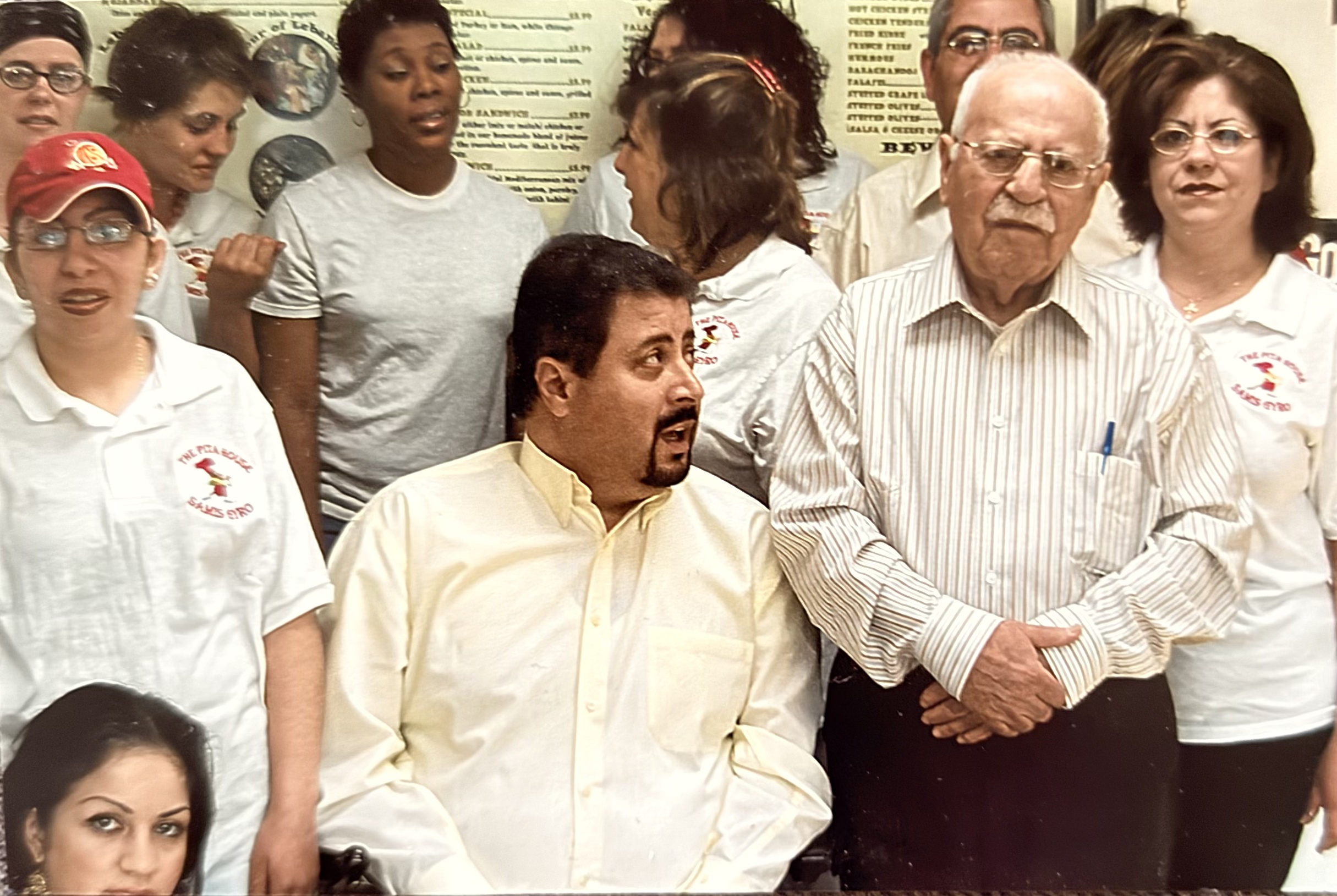
One night (of many), the Shatara’s invited me to their home for dinner. They were incredibly excited because they were making mansaf. Basel explained that to get the traditional ingredient used to prepare the dish, he had driven all the way across the state to Detroit.
When it hit the table, the mansaf was served on a large platter with rice stained golden from turmeric, tender fall-off-the-bone lamb, and a white, salty, tangy, umami-rich “sauce” called jameed (a fermented yogurt preserved using traditional sun-drying methods). To top it all off, the platter was bejewelled with freshly chopped green parsley and ghee-toasted almonds and pine nuts. Everything was piled atop a foundation of shrak or markouk bread, an incredibly thin, almost see-through flatbread. That first bite locked straight into my memory. It’s a flavour my tastebuds can conjure no matter how much time has passed.
Recently, Marni gifted me an entire tub of homemade jameed that she crafted from a dried ball she brought back from Jordan…. talk about true love! I wanted to share that love and have my friends experience their first taste of mansaf, just like I did all those years ago, so I threw a mansaf dinner party!
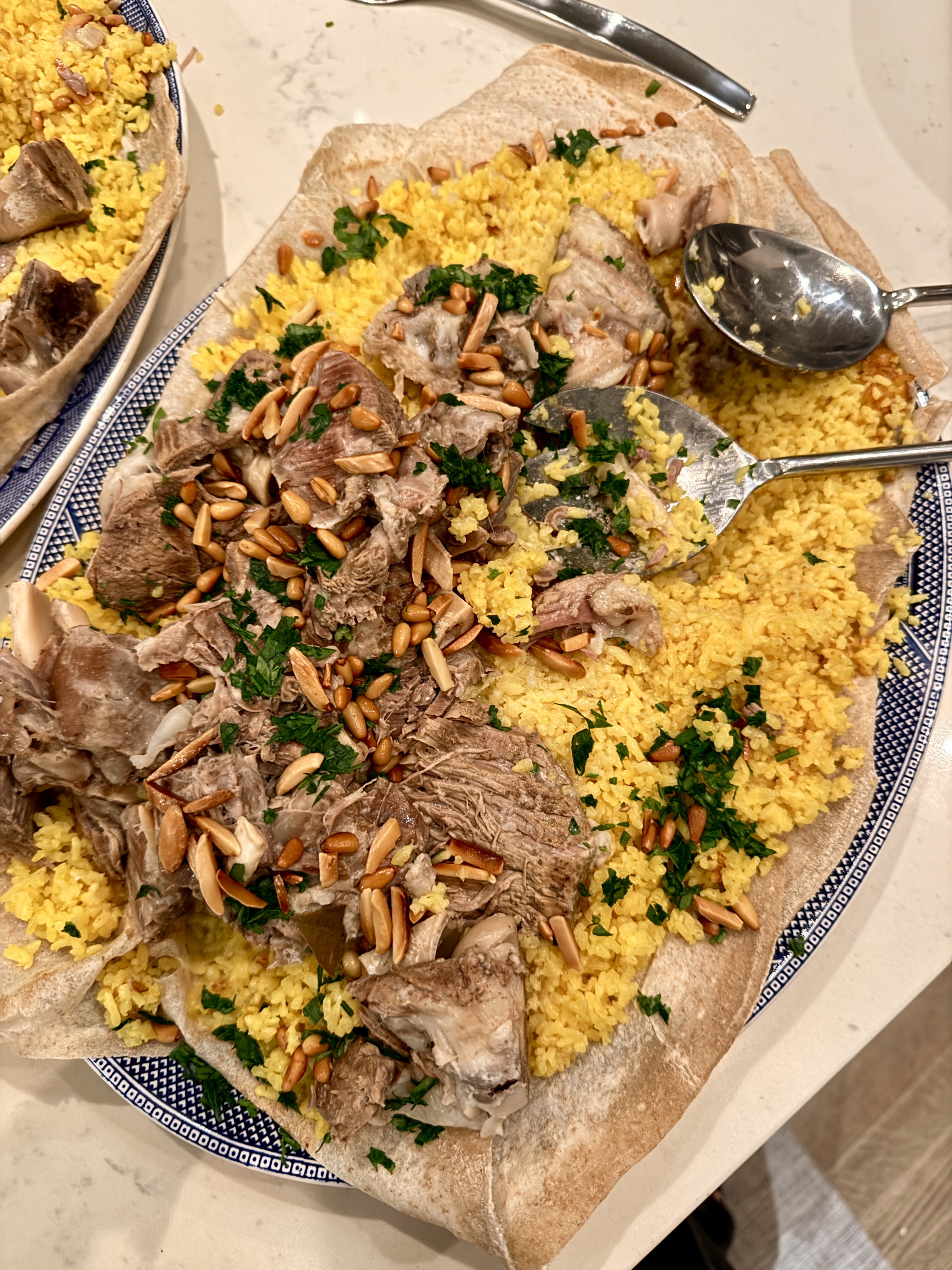
If you’re curious about mansaf or want to make it yourself, you can find the traditional dried jameed at Nablus Creamery. You can also find it already in liquid form at places like Arz Fine Foods or Adonis in Toronto, but as Marni and Basel explained to me, the dried version is what truly makes the dish.
In fact, jameed dates back to Bedouin times in Jordan, Palestine, Syria, and Egypt as a brilliant way of preserving milk. Bedouin women made it by churning fresh milk inside a suspended goat-skin sack called a shakwa until it separated into clarified ghee (samneh) and fermented buttermilk. The remaining buttermilk was boiled, strained into a thick curd paste (jabjab), and heavily salted. To finish the process, the hand-shaped curds were dried in the scorching desert sun atop clean rocks, mats, or tents, leaving behind indestructible, stone-hard yogurt balls built to endure years of nomadic travel.
Beyond just a meal, mansaf holds profound historical, legal, and political weight. In Bedouin culture, serving it is the ultimate expression of hospitality, where the type of meat presented directly indicates a guest’s status. Historically, serving lamb with the cooked head placed in the centre of the tray was the highest honour you could show a person. Furthermore, under Jordanian tribal law (Asha’ir), mansaf served as a powerful tool for diplomacy. It was traditionally used to settle blood feuds and resolve tribal conflicts; when opposing factions finally came to a peaceful agreement, they would sit together and eat mansaf from the same platter to officially seal the peace treaty.
The culture surrounding how you eat mansaf is just as beautiful as its history. Traditionally, it is a completely communal experience where guests stand close together around the table. Tucking your left hand firmly behind your back, you use only your right hand to gather a bit of the tender lamb and rice. With a practiced, gentle roll of your palm, you shape the mixture into a compact ball, balancing it on your fingers before flicking it straight into your mouth in one perfect bite!
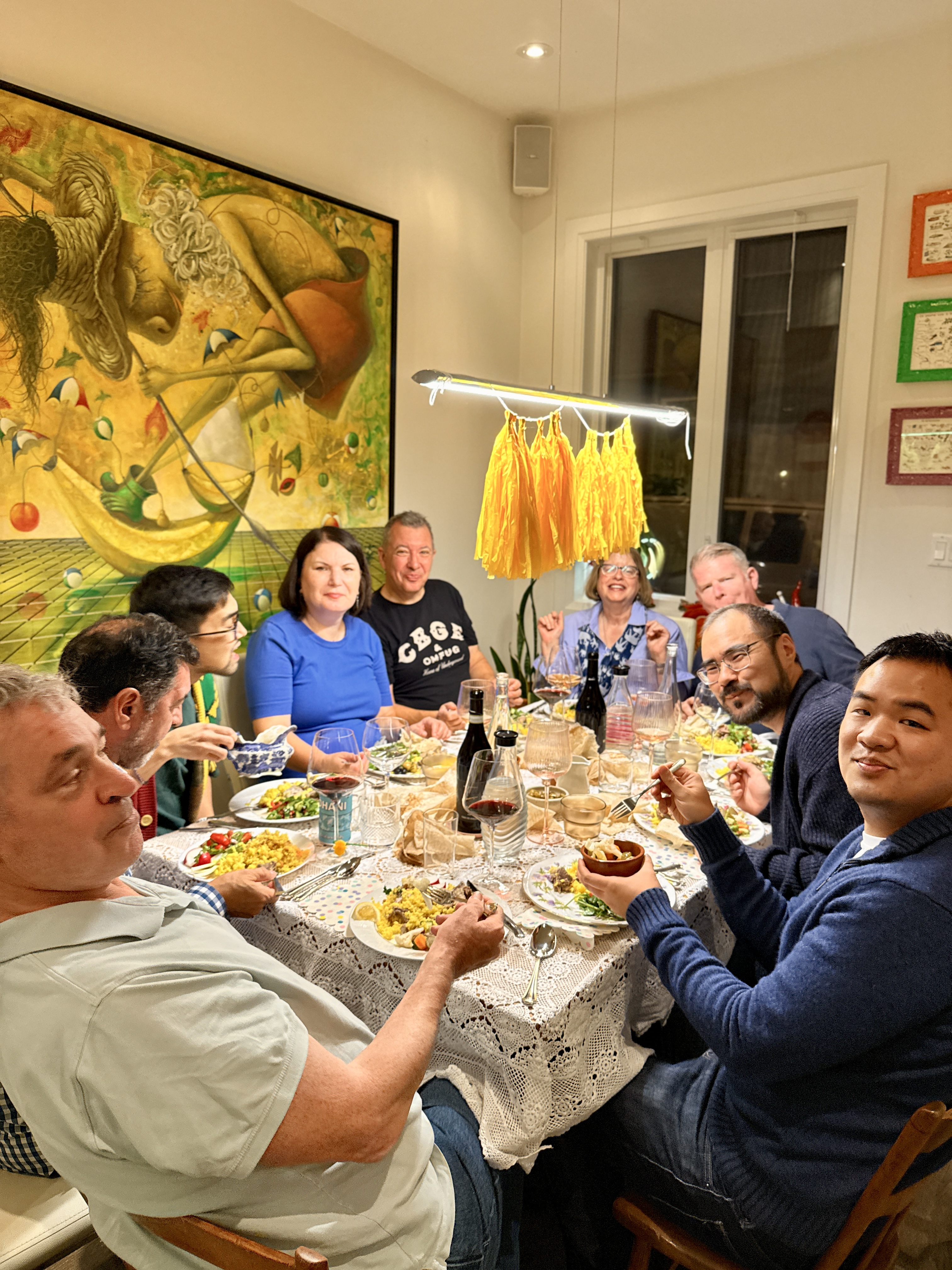
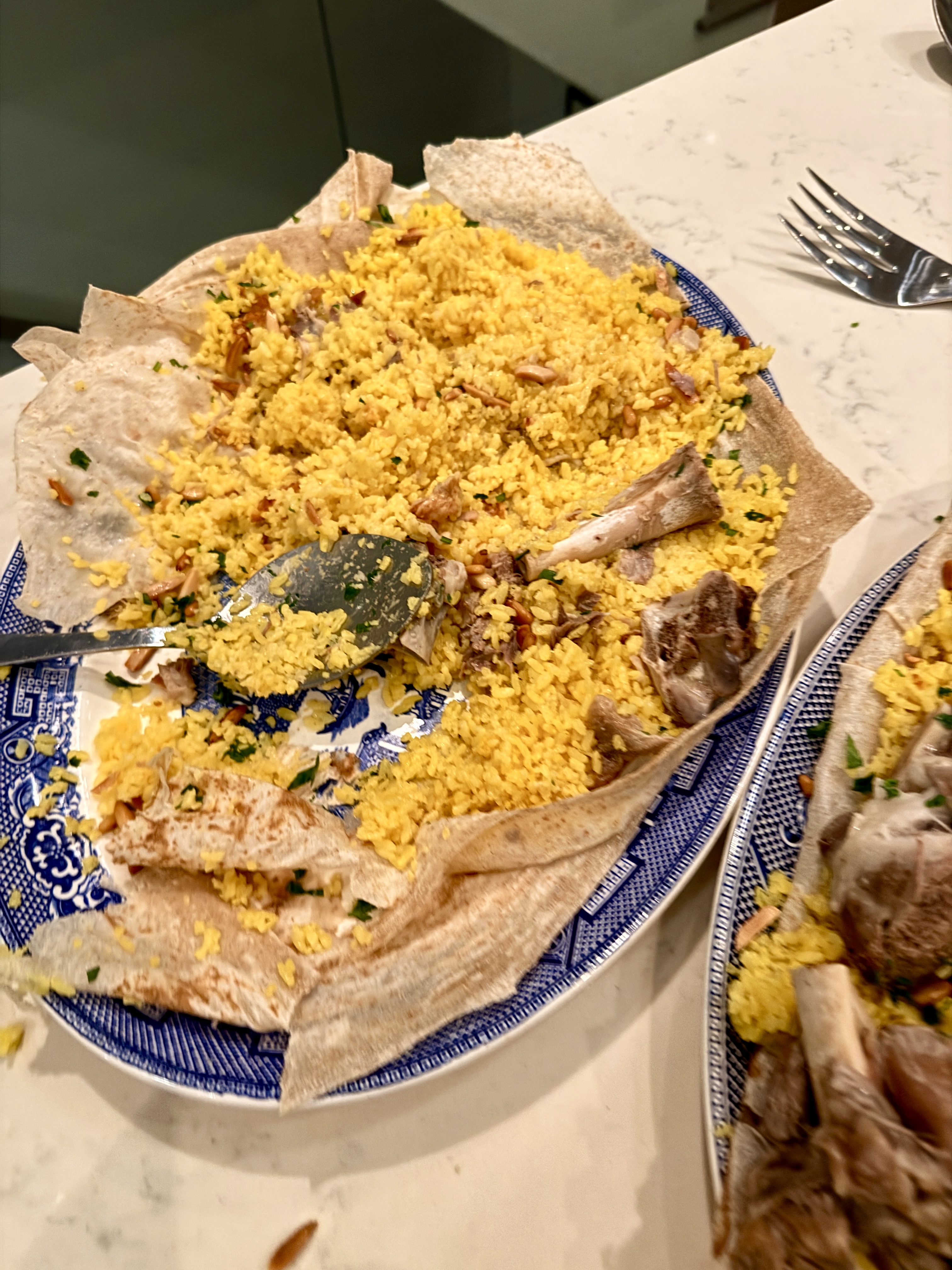
For my mansaf dinner party, we shared not one, but two large platters of mansaf alongside a crisp green salad, hummus, and babaghanoush. We ended the evening with an assortment of sweet baklava from Crown Pastries.
It was a memorable night: nine of us squeezed around a six-person table, sharing incredible food and making new memories. As I watched my friends take their very first bites, I couldn’t help but smile thinking back to Basel and Marni’s dining table all those years ago. We were sharing incredible food, crossing cultures, and making new memories, just like they had done for me.
My Kitchen Notes:
If you want to throw your own mansaf dinner party, here is exactly how I prepare the components based on what I’ve learned:
1. The Lamb
- The Cut: Use lamb shoulder and shank. Ask your butcher to cut it into large chunks with the bone left in.
- The Method: Cover the lamb with water, bring it to a boil, and skim the surface. Add aromatics like onion, black peppercorns, and cardamom, then lower to a simmer until the meat is completely tender. Be sure to reserve all of the liquid/lamb broth, as it will be used in the jameed and rice.
2. Preparing the Jameed
- If using dried balls: Wrap the hard jameed ball in a clean towel and smash it with a mallet or heavy rolling pin into small pieces. Place the pieces in a bowl, cover with warm water, and let them sit overnight to soften completely.
- The Next Day: Strain your warm lamb broth. Add 2 to 4 cups of the hot broth into a blender along with the softened jameed. Blend until perfectly smooth, creamy, and completely lump-free.
- Simmer: Pour the blended liquid into a pot. Heat it over medium-low, stirring constantly until it gently bubbles (don’t leave it unattended, or it might curdle or separate!). Once bubbling, transfer your cooked lamb into the jameed and simmer them together for 20 minutes before serving.
3. The Rice & Assembly
- The Rice: Calrose rice works best. Melt a generous tablespoon of ghee in your pot, add your rinsed rice, and stir it for a few minutes to coat and beautifully toast the grains. Add a generous pinch of turmeric to give it that iconic, lovely golden hue.
- The Liquid: Instead of water, use your leftover strained lamb broth to cook the rice. This infuses the grains with the deep flavour of the meat and aromatics.
- To Plate: First, layer a piece of the shrak/markouk bread on the bottom of a large communal platter and ladle a bit of the warm jameed sauce directly over it to soften it. Next, pile on the fluffy golden rice, arrange the tender lamb chunks on top, and pour copious amounts of jameed over everything.
- The Finish: Garnish generously with freshly chopped green parsley, ghee-toasted almonds, and ghee-toasted pine nuts.
Always serve extra bowls of the warm jameed sauce on the side so diners can keep adding more to their mansaf as they eat!

