
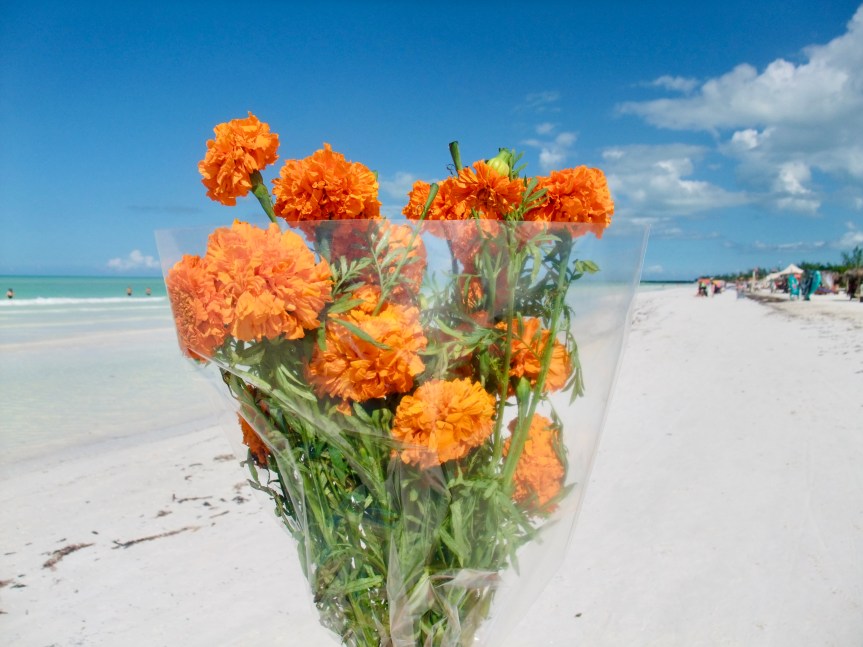
Having recently started spending part of my time living on Isla Holbox, I’m discovering the island in a different way. Beyond the beaches and familiar holiday scenes, I’m beginning to learn about the traditions, food and everyday life that give this place its character.
The most moving thing I’ve encountered on Isla Holbox wasn’t at a parade or a public celebration. It was tucked quietly behind a pharmacy counter.
When I first arrived in Holbox, I started hearing about Hanal Pixán, a Maya tradition of remembrance observed in the Yucatán Peninsula around the same time as Día de Muertos. The name translates as “food of the souls,” a reference to the belief that the spirits of loved ones return to be welcomed by their families.
As with Día de Muertos, food, flowers, candles, and family altars are central to the observance. Special dishes, including mucbipollo, or pib, are prepared, and offerings are arranged to honour those who have passed. Much of this happens in private homes, away from the public celebrations that visitors might see.
And that’s where I had an encounter I won’t forget—one that literally took my breath away.
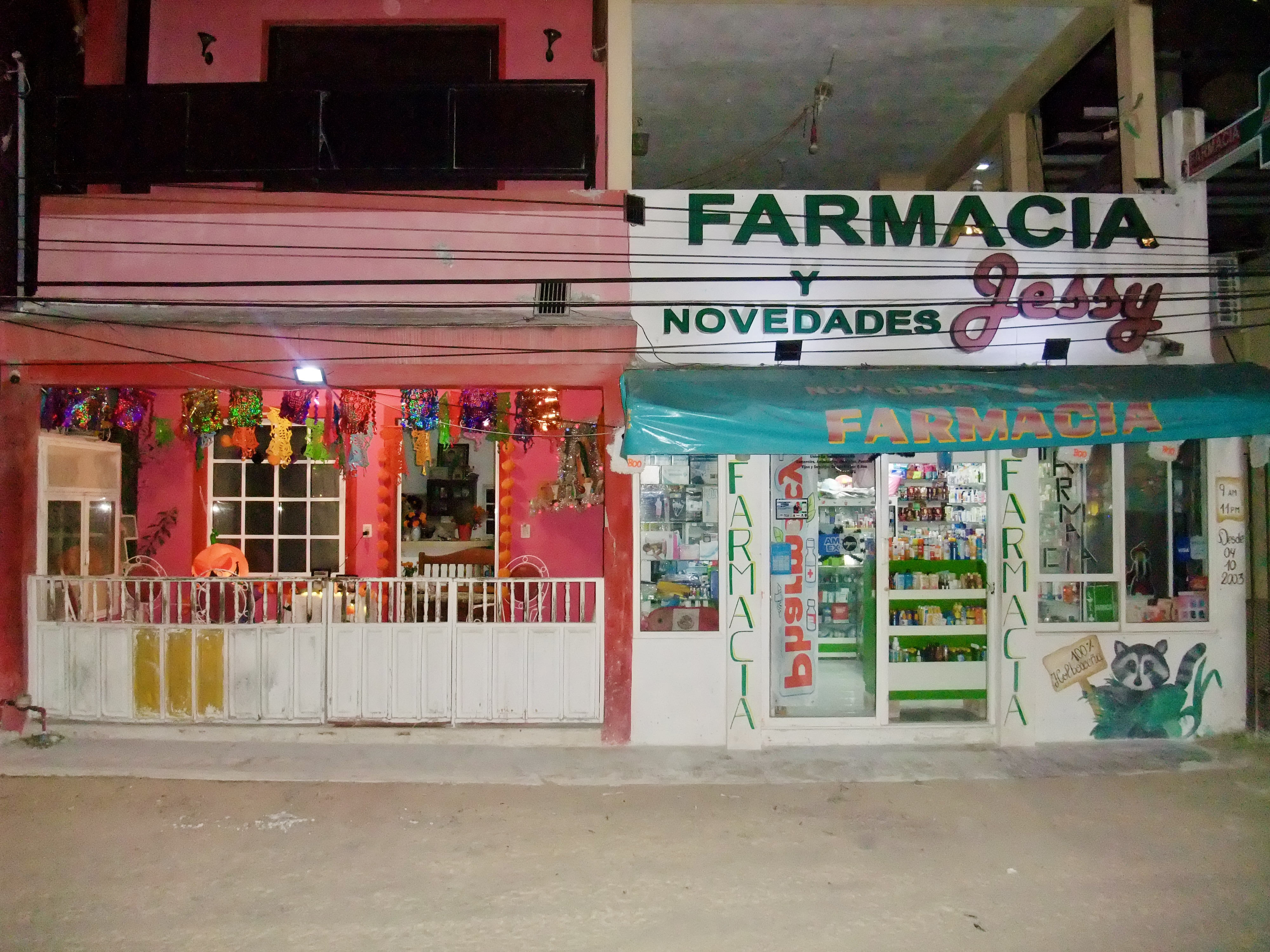
I was at Farmacia Jessy, picking up medicine, when I noticed a beautiful, multi-tiered altar in the home adjoining the pharmacy. There were photographs of family members and pets, cempasúchil (the bright orange marigolds associated with remembrance), candles, and food offerings. It was clear that a great deal of thought and love had gone into it.
I asked the woman behind the counter if it was hers. It was, and she warmly invited me in to have a closer look.
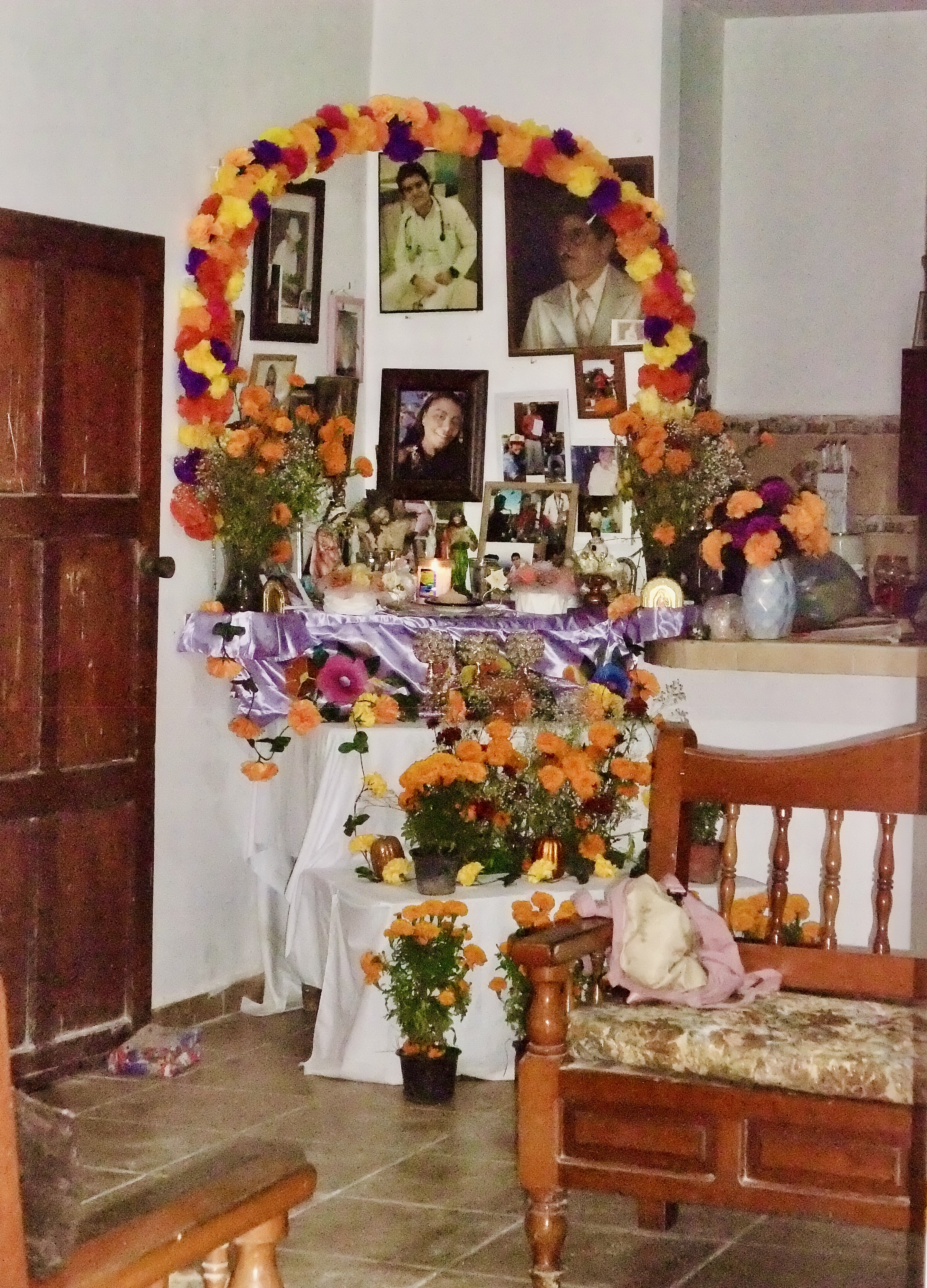
The main photograph, she told me, was of her son, who had been a doctor. Standing there in her pharmacy, I found the whole moment deeply moving. It was a family’s very personal way of remembering the people and pets they love—and she had generously invited a complete stranger to share a little of it.
I’m so glad I asked.
I’ve always been drawn to the rituals that shape everyday life, especially the ways food, flowers, and familiar objects carry meaning. I know I have a great deal more to learn about Maya culture, and I wouldn’t presume to understand a tradition from one encounter. Still, this gave me a glimpse of something both deeply personal and universal: the desire to honour and keep loved ones close.
The cempasúchil stayed with me, too. I stopped at a local florist and bought a bundle for our home, putting some in a vase in the living room and a few beside my bed. Every time I saw them, they brought me comfort and gave me a meaningful way to remember my own loved ones who have passed on.
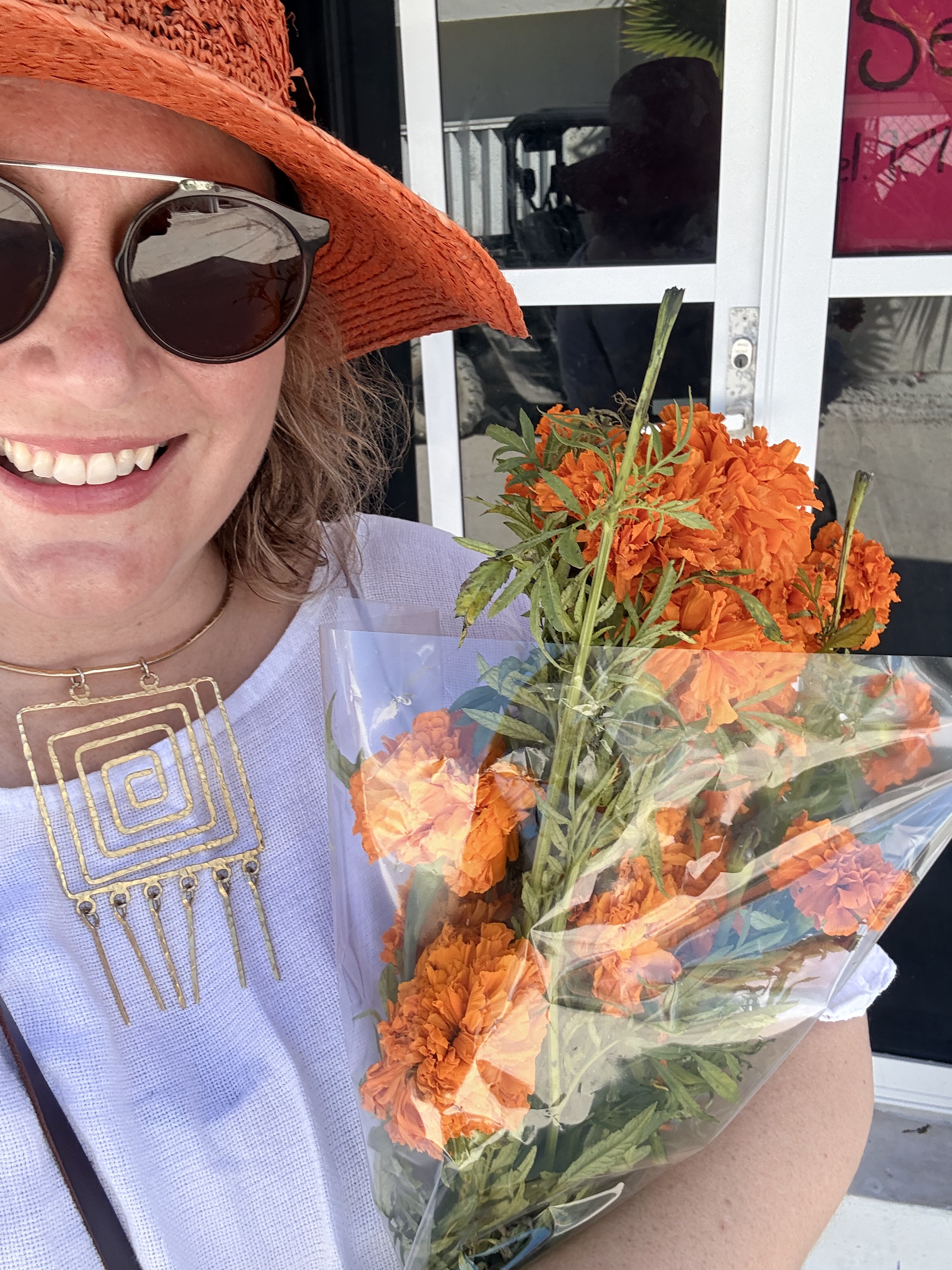
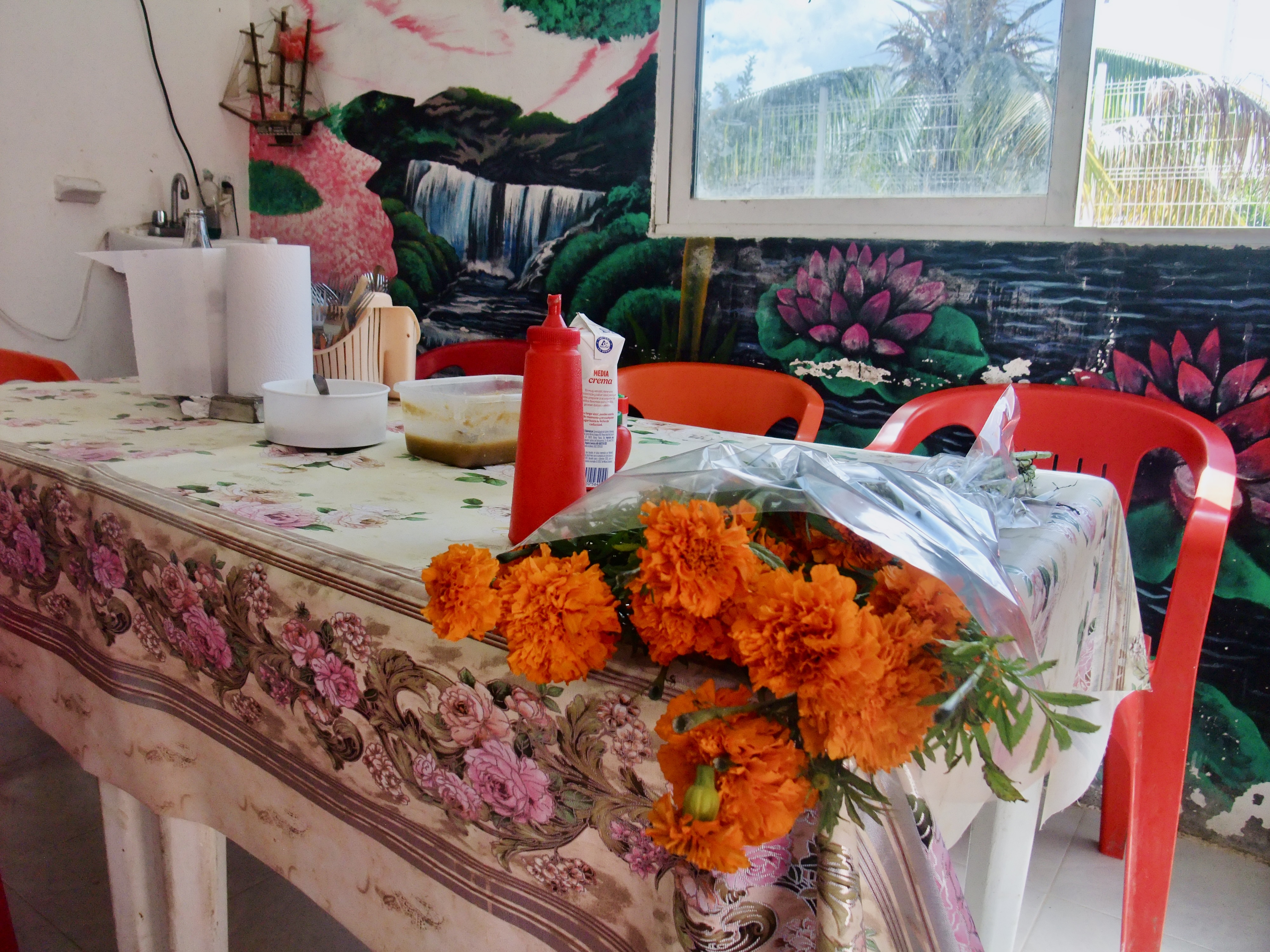
I’m still here in Holbox, and these are the moments teaching me about this place beyond its beaches and scenery.
The conversations, the people, the customs, and the unexpected invitations. Sometimes the most meaningful introduction to a culture happens when you least expect it.


