
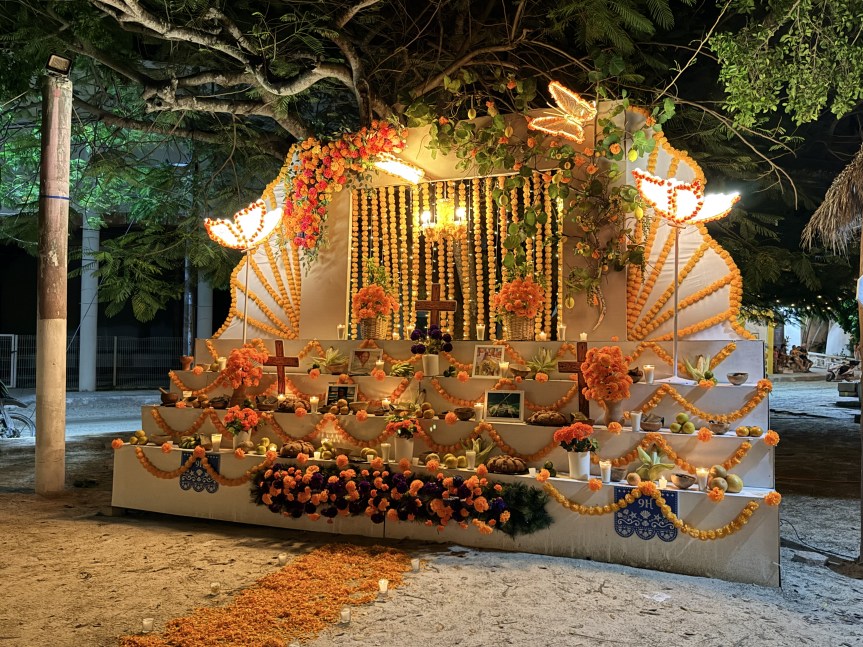
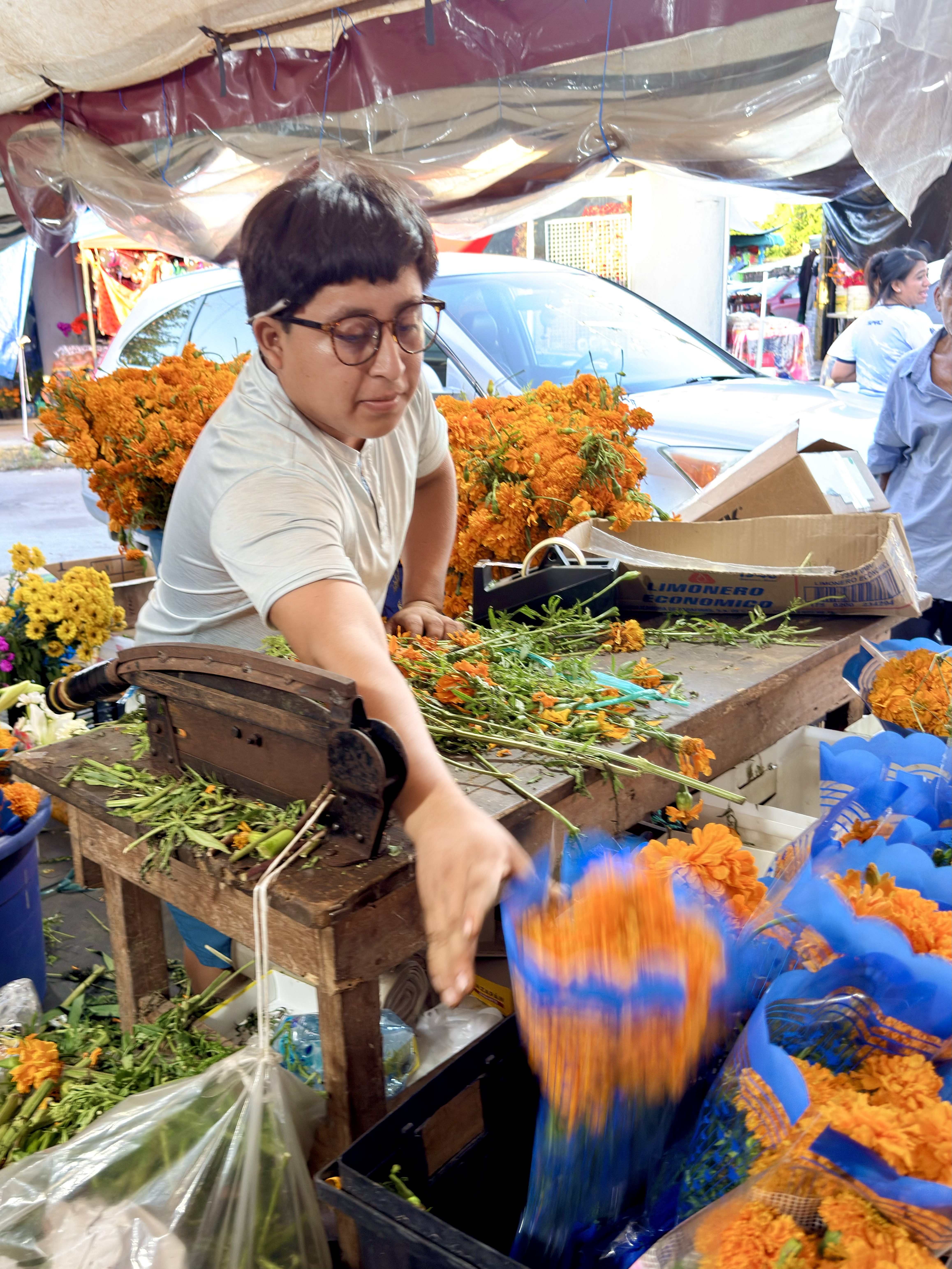
I arrived in Cancun on October 28th on my way to Isla Holbox. This was my first time in Mexico during Día de Muertos, and I noticed right away that preparations were well underway. I loved spotting the different symbols, rituals and foods. The markets were filled with buckets of bright marigolds, and vendors selling traditional sweets like pan de muerto, limones rellenos de coco and dulce de calabaza. Everywhere you looked there were altars and traditional dance and music.
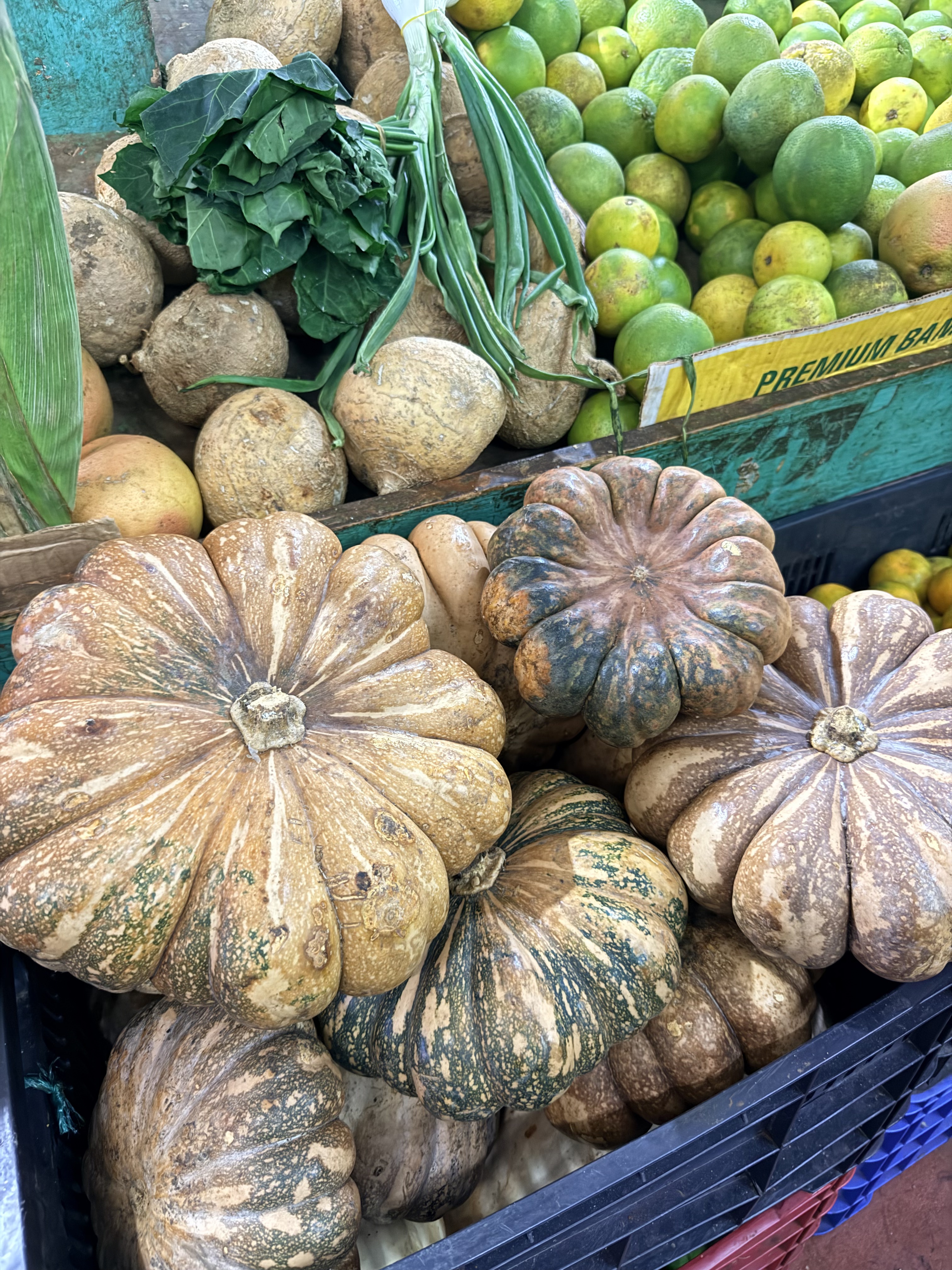
Mercado 23
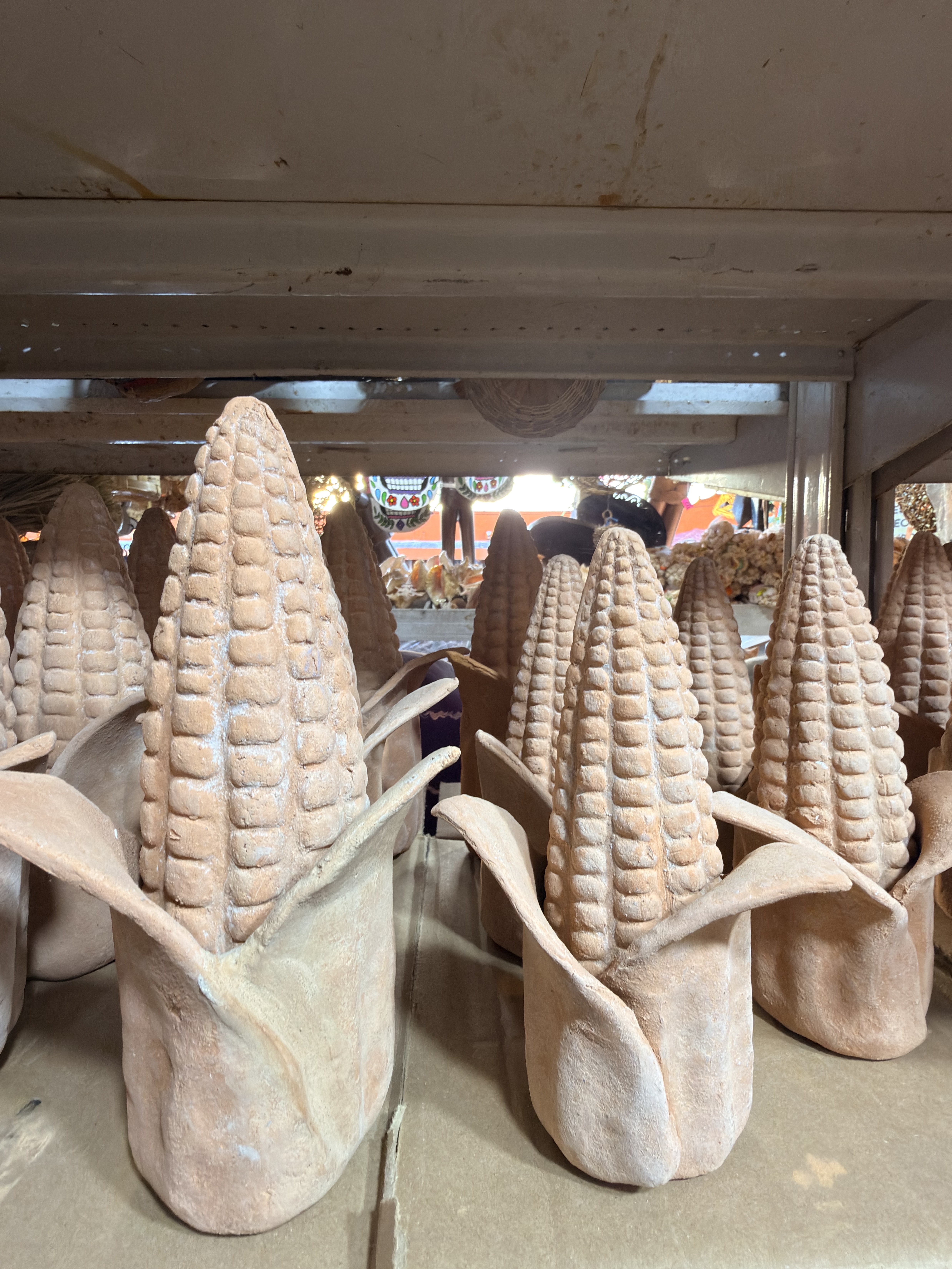
Barro y Artesanías de Hidalgo is one of my favourite shops in Cancún. It’s literally filled to the brim with pottery and traditional crafts, and every time I look a little closer, I find something I missed. This time it was the mazorcas de barro, or clay ears of corn.
When I asked the shopkeeper about them, she explained that Día de Muertos coincides with the end of the annual corn harvest. In Mesoamerican cosmology, maize isn’t just a staple food. It is considered the very substance from which humanity was created. I would see that sacred connection again in Holbox in the food itself, from the masa of the pib to the corn in the atole.
There were also the sweetest little clay plates of food for decorating altars, with tiny tamales and sweets. I couldn’t resist bringing a few home!
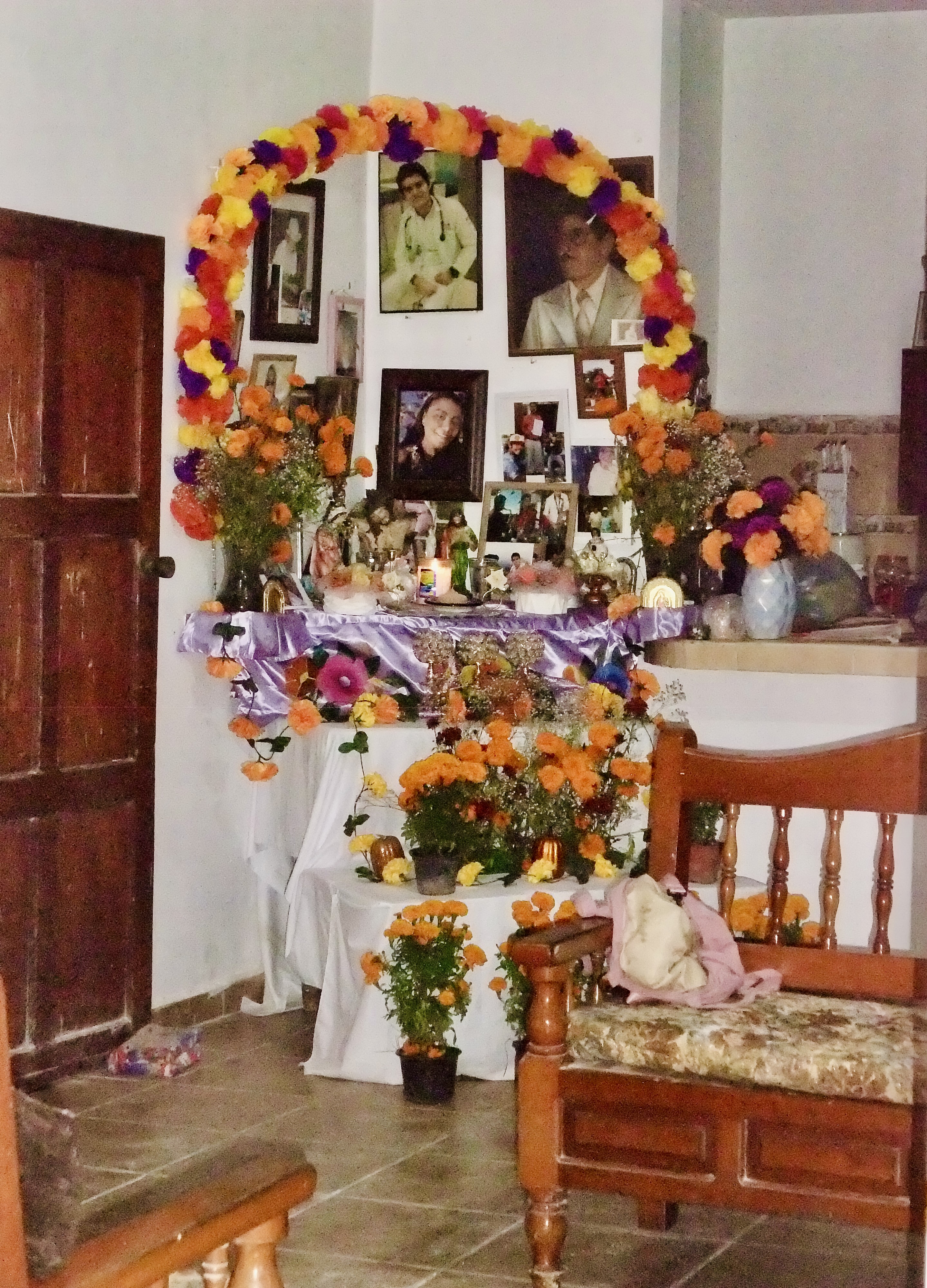
The ofrenda behind the pharmacy
Once I arrived on Isla Holbox, I realized the holiday had a different name and a much deeper, more local rhythm. While the rest of Mexico celebrates Día de Muertos, the Yucatán Peninsula observes Hanal Pixán, a Yucatecan Maya tradition that translates to “food of the souls.” It honours the same time of remembrance, but it is rooted in indigenous Maya customs and is felt most deeply in small pueblos and family homes.
Every autumn across the region, families gather to cook massive seasonal tamales called mucbipollo, or pib, and set out offerings to welcome back deceased relatives. While visitors often see public ofrendas (altars) and parades, the true heart of this practice takes place behind closed doors around family tables. Often spelled Janal Pixan in official regional records, the tradition is deeply rooted in memory, prayer, and the enduring bond between the living and the dead.
The ofrenda that stayed with me and truly took my breath away was one I came across while buying medicine at Farmacia Jessy in Holbox. From the pharmacy counter, I could see into the adjoining home, where a beautiful multi-tiered altar filled a corner. There were photos of loved ones and pets, marigolds, glowing candles, and food offerings. You could sense just how much love went into it.
I asked the woman behind the counter if it was her altar, and she invited me in to see it. She told me the main photo was of her son, who had been a doctor. It was the most moving way to remember loved ones and keep their memory alive. I’m so glad I asked her about it.
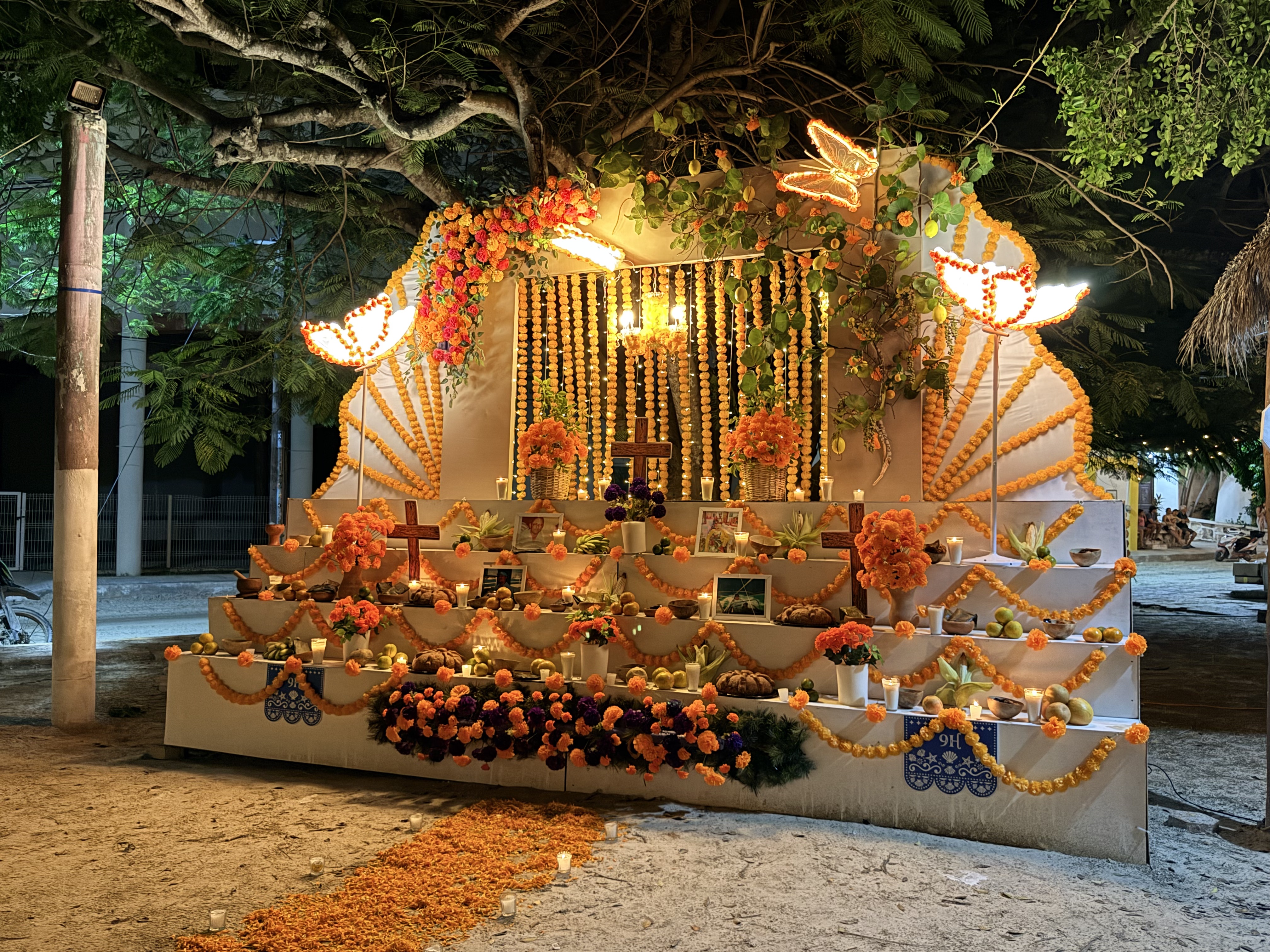
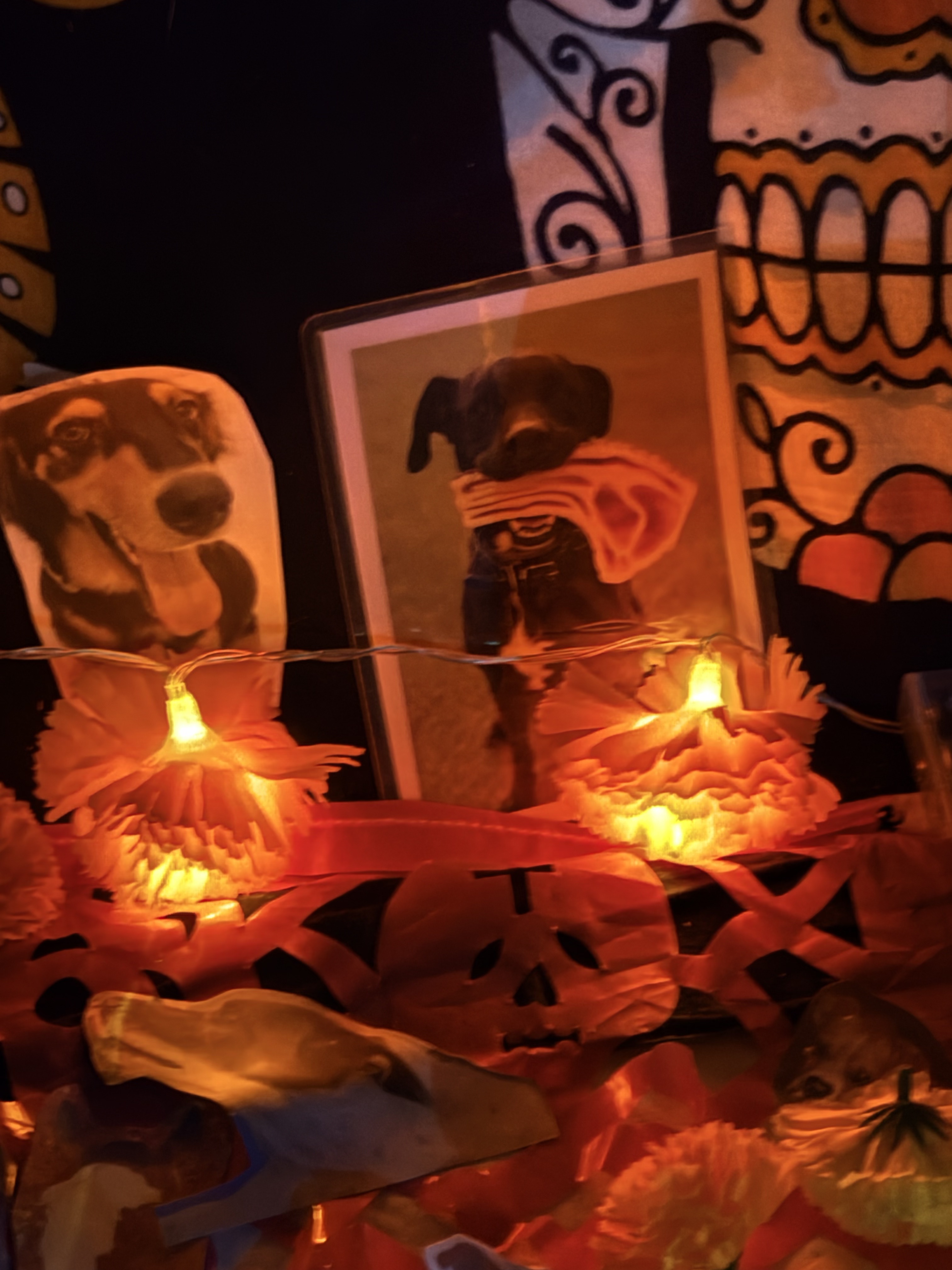
Around town some of the local businesses had their own altars as well, I saw 9 Hermanos, Chedraui, several restaurants and hotels and another sweet one was the Refugio Animal Shelter which was filled with photos of pets.
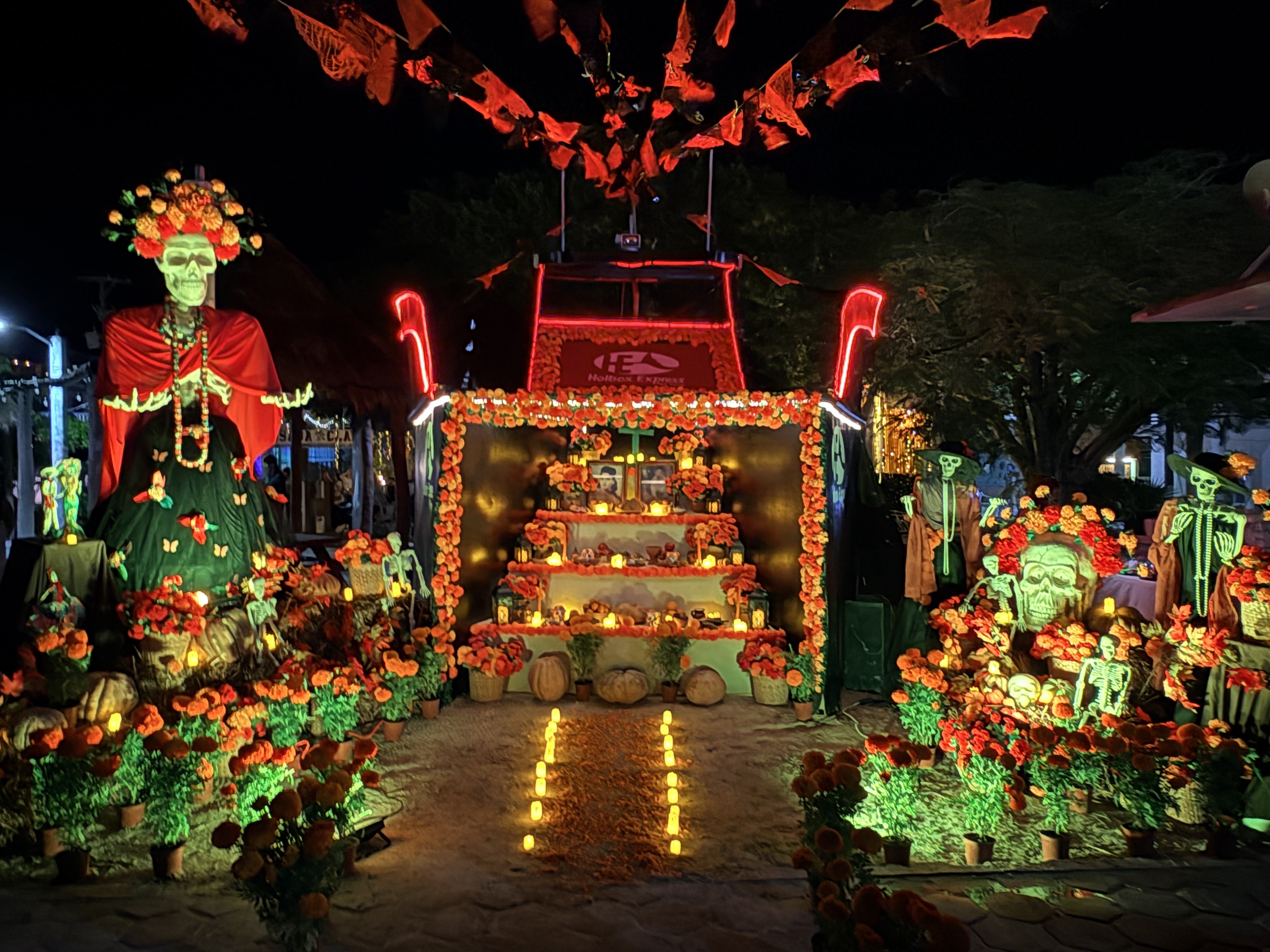
Paseo de las Ánimas
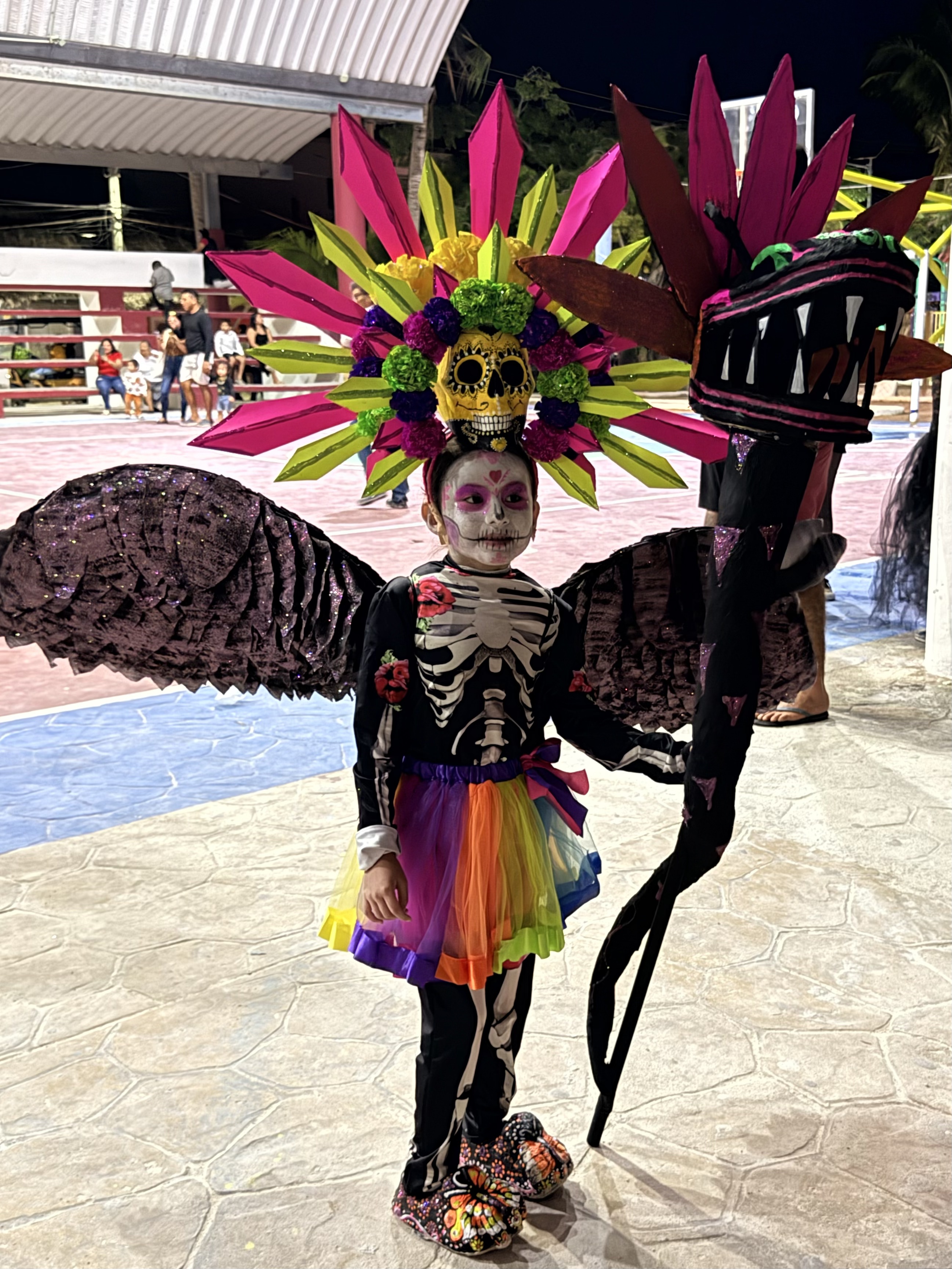
On November 1st, locals and visitors gathered at the Concha (the iconic seashell-shaped amphitheater) in Holbox’s town square. Performers from Quintana Roo and Yucatán danced and sang well into the night. I was fortunate to stand next to the mother of one of the younger singers. Using my minimal Spanish, I learned which towns the artists came from and who had trained with her daughter. It felt extra sweet to spend the evening cheering together and exchanging smiles.
I watched people in traditional clothing (such as white hipiles and guayaberas) and painted skull faces carry candles in the Paseo de las Ánimas, the procession of souls, which symbolizes the souls of departed loved ones rising from the cemetery and walking back to the world of the living to visit their families.
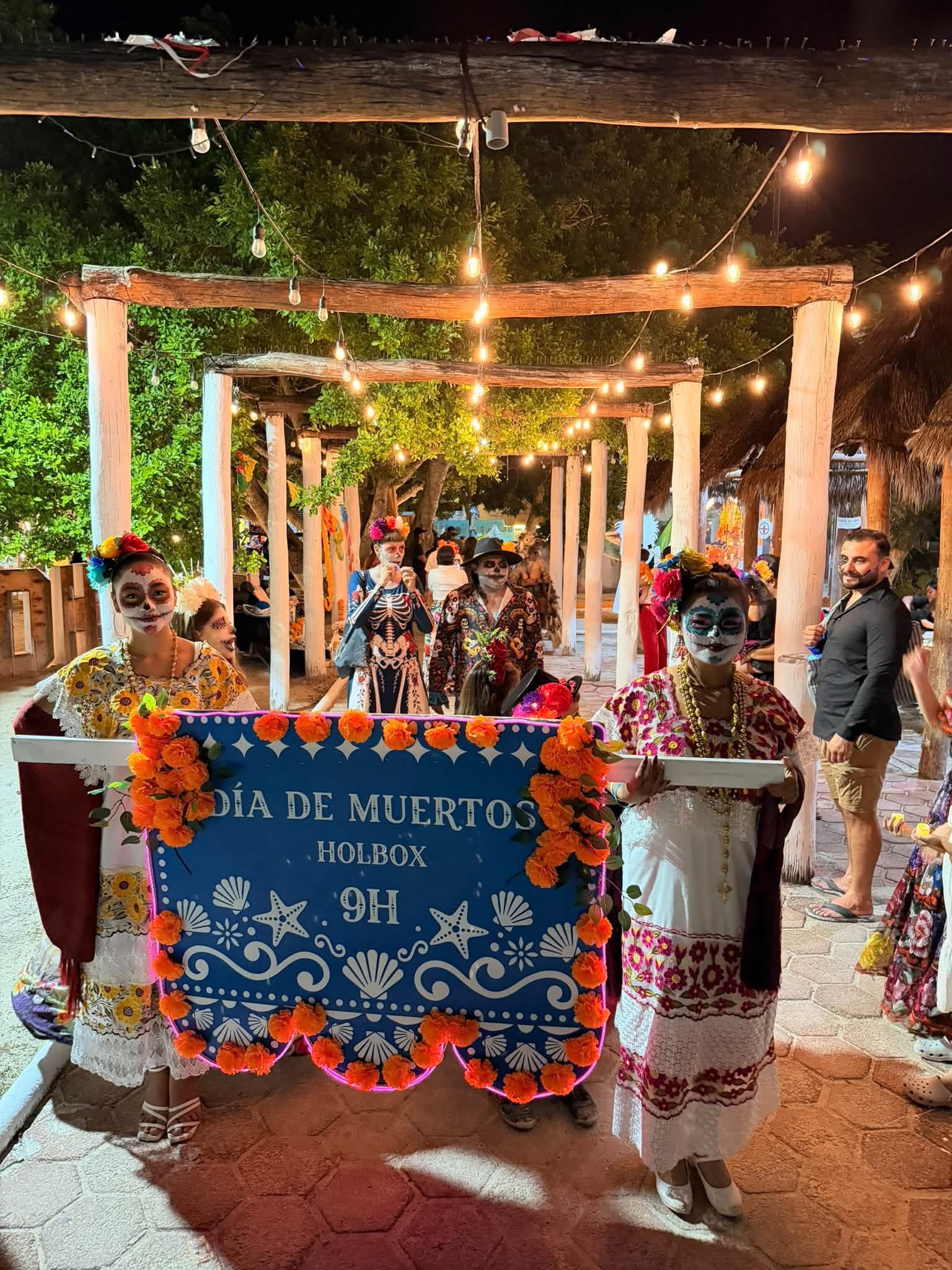
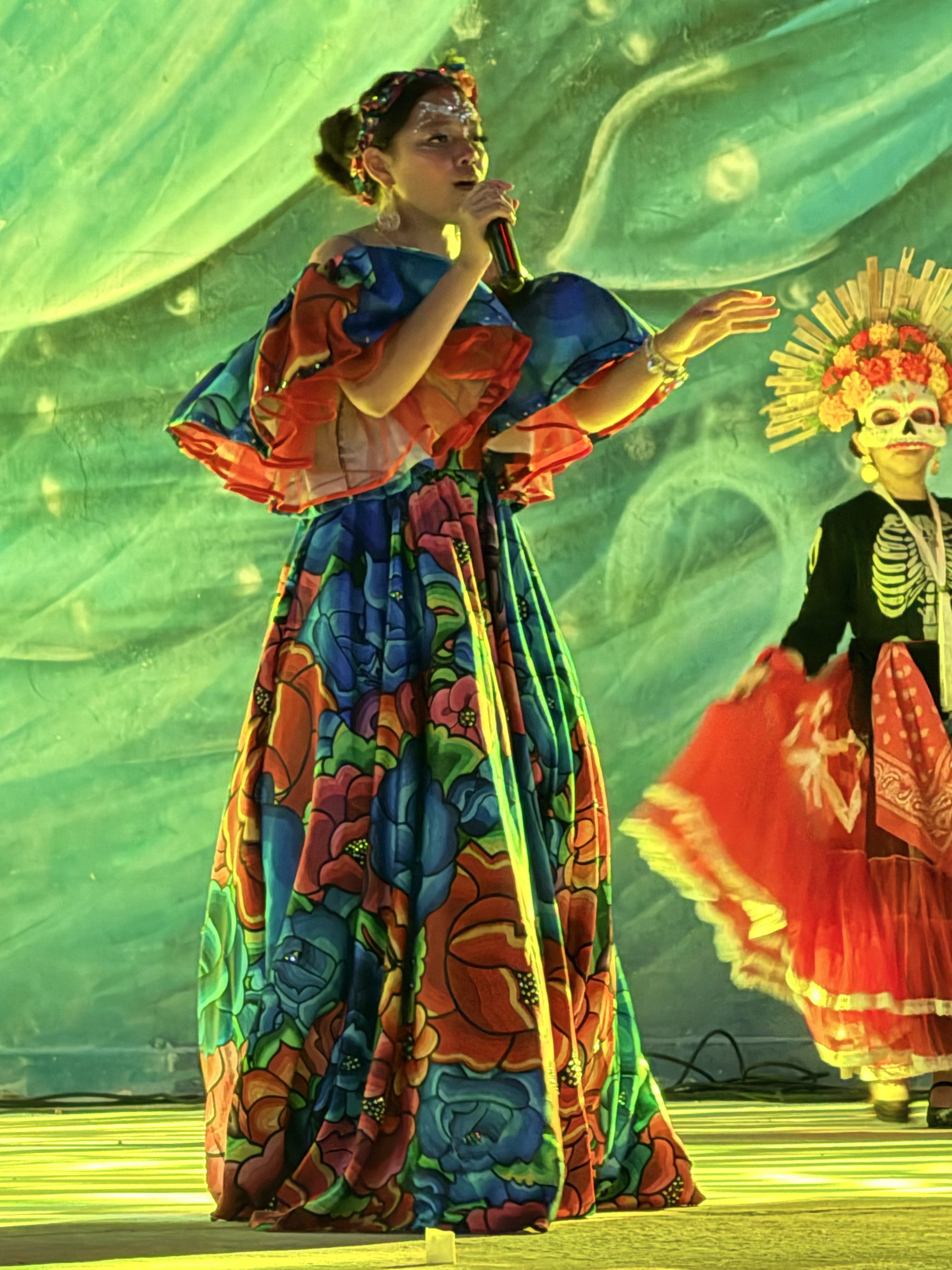
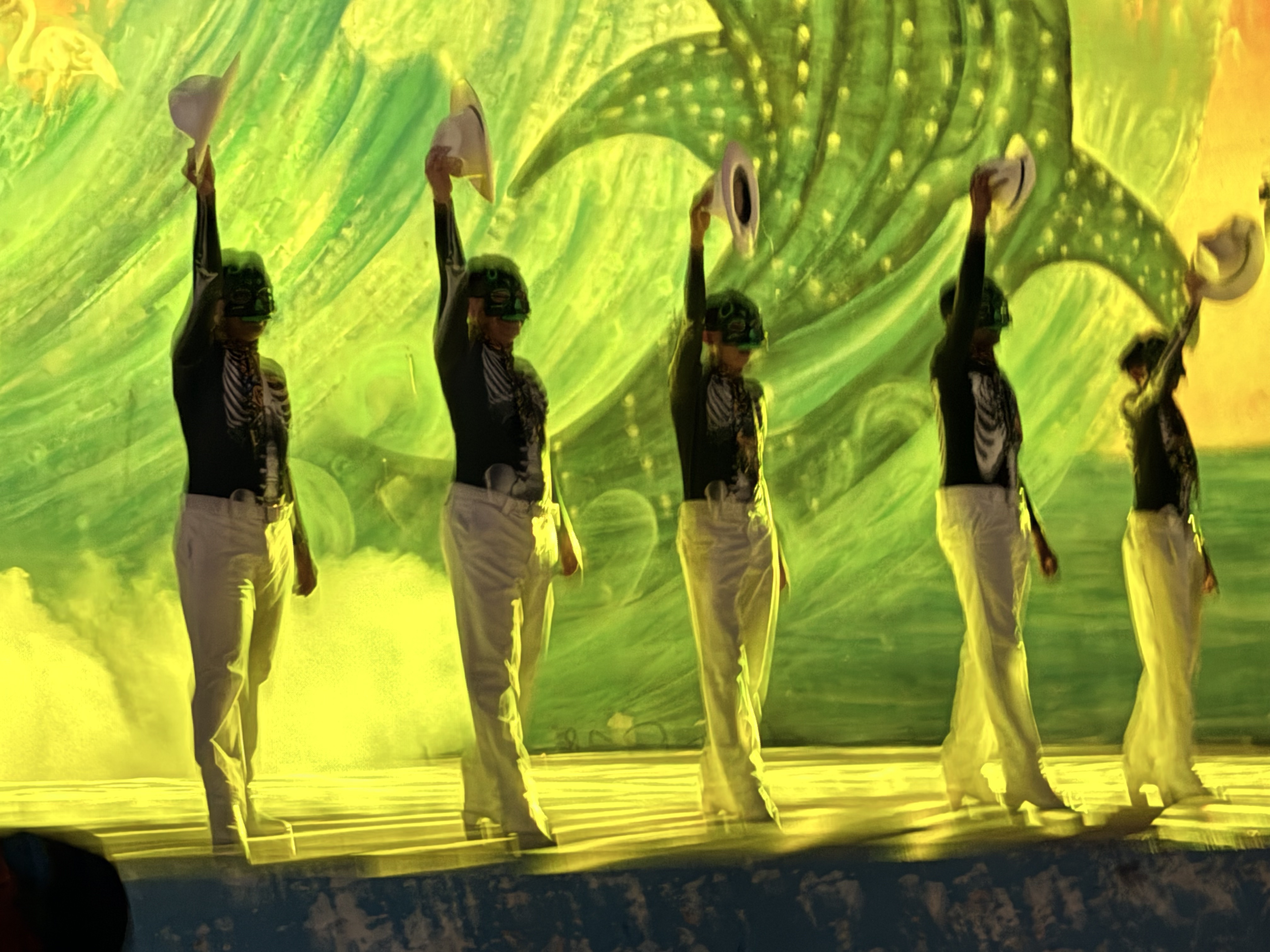
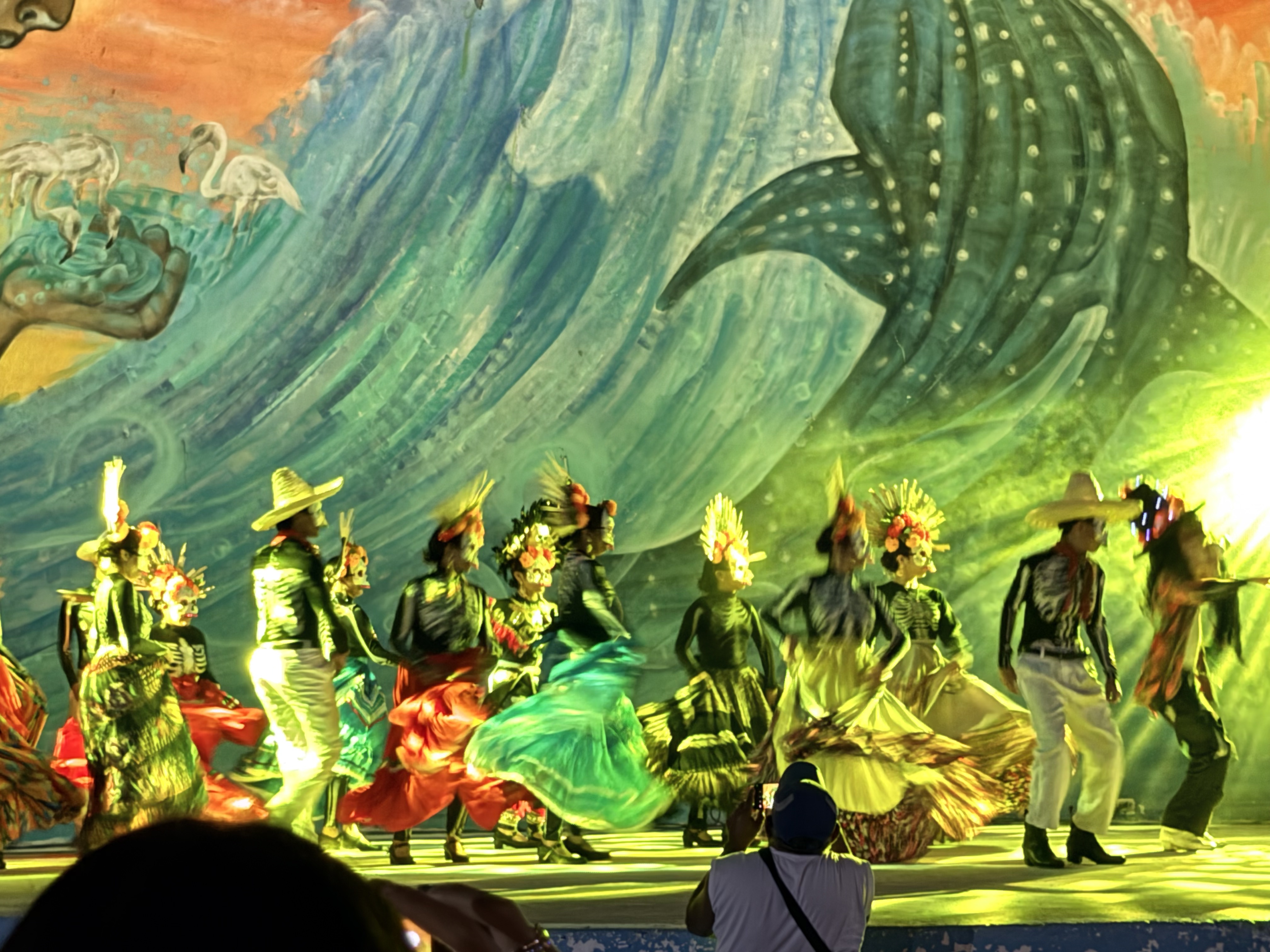
Everyone told me to try the pib
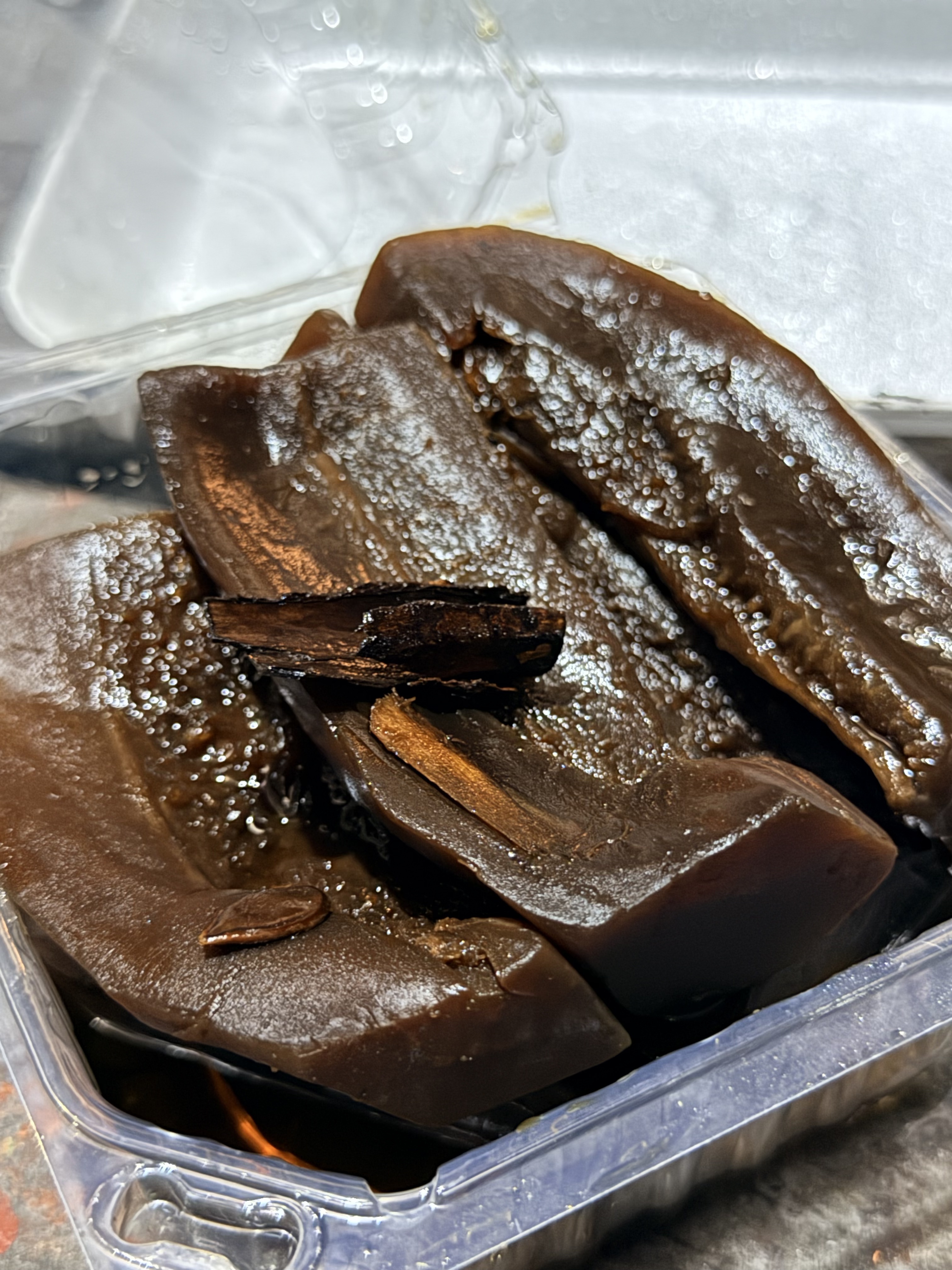
In front of city hall, an outstretched table held traditional celebratory foods for sale, including mucbipollo (pib), atole, hot cocoa, dulce de calabaza, papaya y yuca, alongside antojitos and desserts. People had been telling me all day to try the pib, so I ordered a piece along with a dulce de calabaza.
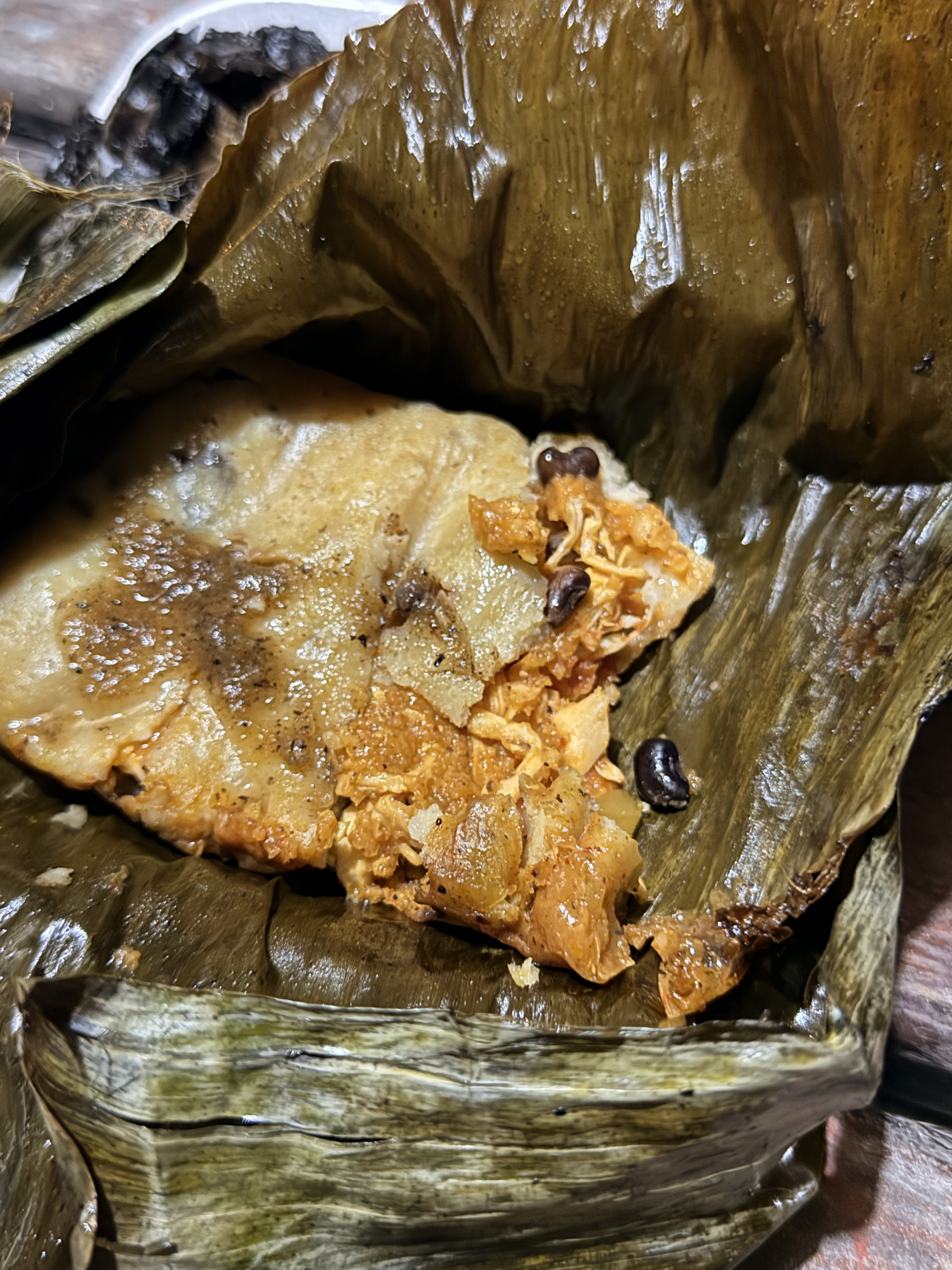
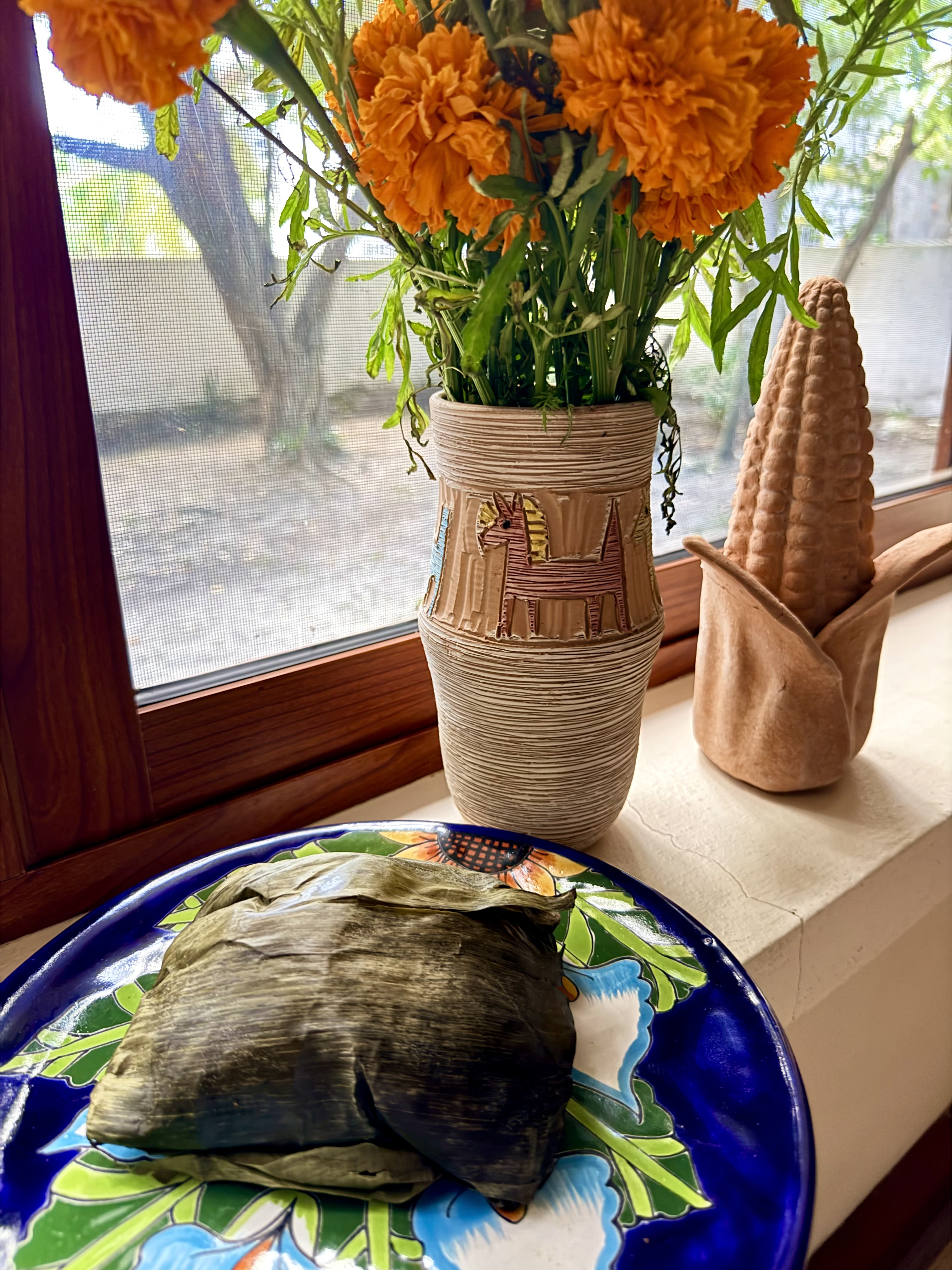
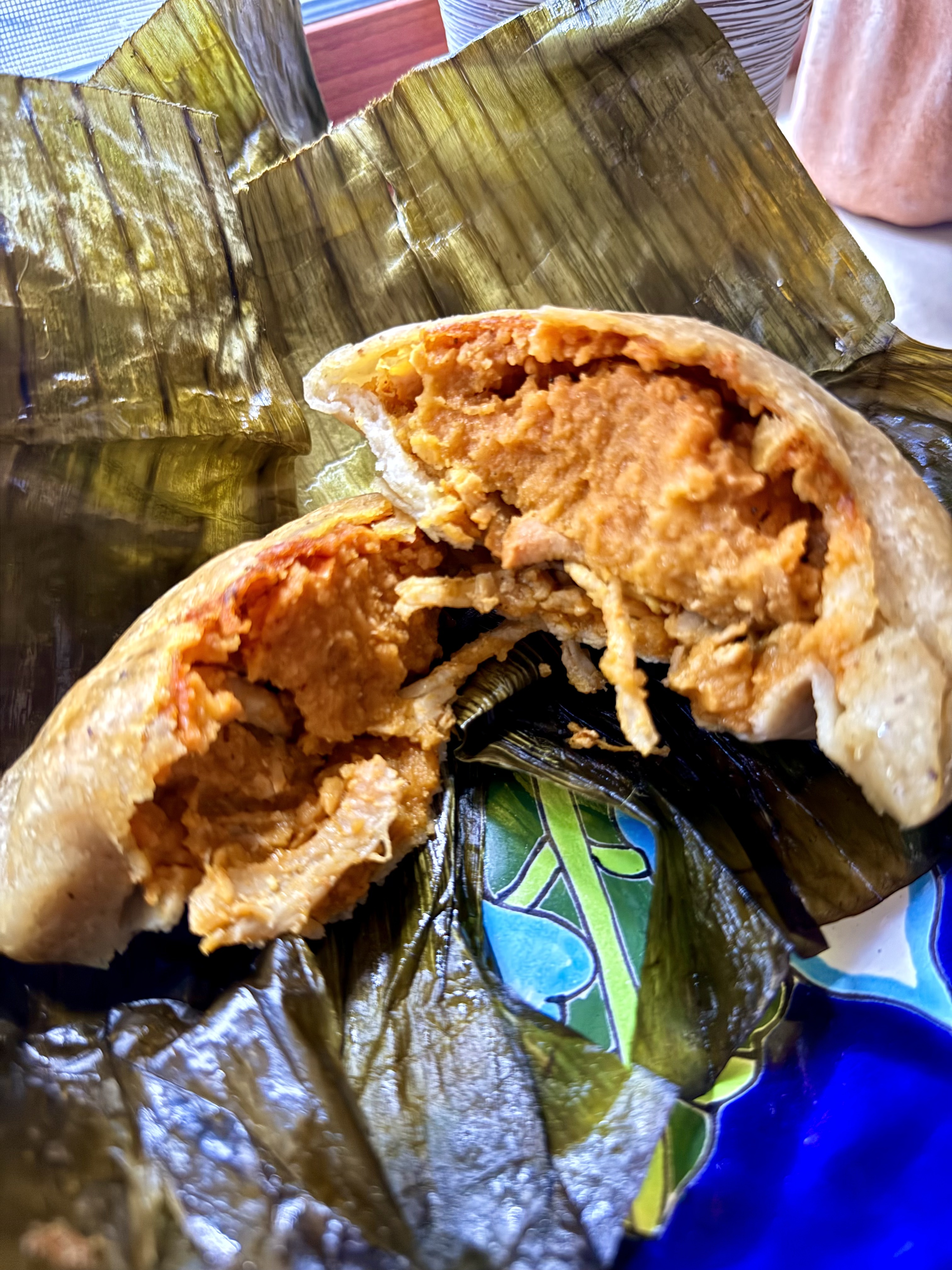
Also known as mucbipollo, pib is a large, pie-sized ceremonial tamale prepared specifically for Hanal Pixán. It features a thick corn masa crust stuffed with chicken, pork, black-eyed beans (espelón), and a spiced achiote sauce (k’óol). Wrapped in banana leaves, it is traditionally slow-baked underground in a wood-fired pit oven—which gives the dish its Mayan name translating to “to be buried.” Families place it on altars to nourish returning souls before sharing it together.
My city hall pib (featured below) wasn’t the traditional hard-crusted, pie-shaped version since they had to prepare so many for the crowd, but it was delicious and I loved the tender espelón beans.
Then I tried Mosha’s
I also ordered pib from Mosha, a local woman who runs a dessert shop from her home. I was told her pib are a must as she makes them especially for Hanal Pixán. Hers were more traditional than the ones I tried in the town square and cooked in fire in a pie shape with a hard outer masa crust. She sold them as individual, medium, large and extra large.
Mosha and I exchanged numbers, and now she sends me a WhatsApp message when she has something homemade for sale. The other day it was donas de plátano, plantain doughnuts. I ordered some of those, too.
I really enjoyed being part of this special time and learning about the traditions, customs and foods, and I can’t wait until next year, when I can learn and experience even more. Have you been in Mexico for ?Hanal Pixán or Día de Muertos? Or wherever you live do you have any traditions or remembrances like this?


